
Don’t Rush to Install OpenClaw: Where Your Files Go Is the Real Problem
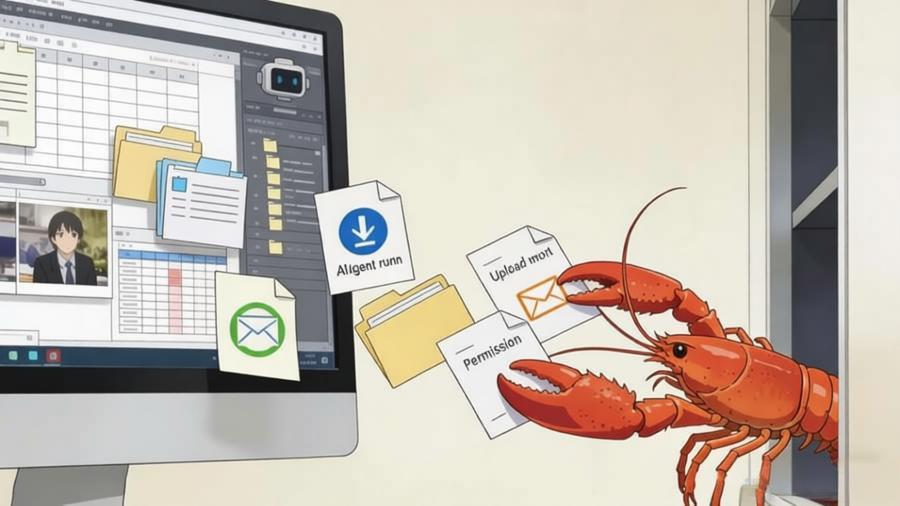
Lately, a lot of people have been asking the same thing:
How do you use OpenClaw?
There is a reason it suddenly became so popular.
It is no longer the kind of AI that only “talks” with you. It is more like an assistant that can actually get work done.You can ask it to create files, use tools, and run tasks step by step. That is why more and more people, including those without a technical background, are eager to try it.
For the first time, many people strongly feel this:
AI is no longer just talking. It is starting to really do things.
But this is also where the problem begins.
What many people care about most right now is:
● How to install it
● How to connect a model
● How to get it running first
But what really decides whether you will run into trouble later is often not whether it can run, but something else:
After it touches your files, where do those files actually go?
This is the part most people are ignoring in the current OpenClaw wave.
You Think You Are Using AI, But You Are Actually Opening the Door to It
When many people first try it, they think:
“I’m just installing a tool to test it. How big can the risk be?”
If this were just normal software, that would be a fair thought.
But OpenClaw is different.
What makes it powerful is not just that it can answer questions. It can also take action.
It can:
● read files
● create files
● use tools
● connect to outside services
● sometimes even connect to your browser, email, chat apps, or work materials
That means you are not just letting it talk.
You are slowly letting it enter your real work environment.
And once it reaches that point, the risk is no longer just “what if it says something wrong?”
The real questions become:
● Will it touch the wrong files?
● Will it send out things that should not leave?
● Will it get too many permissions and become hard to control?
The Problems Around OpenClaw Are No Longer Just Scary Stories
In real OpenClaw use today, several kinds of risk have already appeared.
The first is fake installation packages.
A user thinks they are downloading a popular tool, but they may actually install malware. In mild cases, they lose an account. In serious cases, even local private data can be stolen.The second is malicious plugins and Skills.
Some add-ons look like they are helping you work faster, but may hide harmful code inside. They can steal browser passwords, API keys, wallet data, and more. In other words, you may be inviting a thief into your home and asking it to help.The third is instances exposed to the public internet.
Many people think they are only using it locally, but in reality, ports, services, or even databases may already be open online without them knowing it.The fourth is giving too many permissions.
To save time, some users hand over email access, file access, and all kinds of permissions at once. If something goes wrong, there may be no time to stop it.The stronger OpenClaw becomes, the less casually you can hand over files and permissions.
In the past, many people used AI by asking one question and getting one answer.
Once the chat was over, that was the end.But OpenClaw is different.
It can now actually work for you.
● And once it starts working, things usually end up involving files.Should the report be saved?
● Should the images be stored?
● Should the spreadsheet be brought back later?
● Should past results be used again in the future?
If the answer is yes, then the file is no longer just a quick result.
The file itself becomes part of the workflow.
And this is where the real problem begins.
If files end up scattered across local folders, temporary scripts, third-party services, or some chain of steps you cannot clearly explain, then the more capable OpenClaw becomes, the bigger the later risk becomes.
So what many people really need right now is not ten more tutorials about how to deploy OpenClaw.
What they need is something more basic:
After the Agent finishes its work, the files should have a clearer, more stable, and more controllable place to go.
That is exactly why more people should start paying attention to MEFS.
Why OpenClaw Becoming More Popular Means You Should First Understand MEFS
In simple words:
MEFS is not just one more storage drive.
It is more like a special place built for Agents to store files.Its role is very clear: it gives AI Agents a standard storage interface, so the content they create can be saved, and later found and used again.
Why does this matter?
Because when people use OpenClaw today, their biggest fear is often not “the file cannot be saved.”
It is:
● the file gets saved in too many places
● after saving it, nobody clearly knows where it is
● later it is hard to find
● and sometimes nobody can clearly explain what path the file went through
What MEFS does is make this clearer.
It supports uploading files, searching for files, and checking remaining storage space.
After a file is uploaded, it returns a CID, which is the file’s unique ID. Later, if you want to find the file again, you can search by that ID.
In plain language, this means:
It is no longer “just throw it in somewhere first.”
It becomes “after the file is saved, you can still identify it and get it back later.”
This is especially important for Agent tools like OpenClaw.
Because what you really want is not only:
“AI can create files.”
What you really want is:
“After AI creates a file, does that file have a proper place to go?”
It Does Not Just Add Storage. It Adds the Missing Base Layer for Agent Work
The more important thing about MEFS is not only that it can store files.
It is that it was built with the Agent use case in mind.
It focuses on:
● letting AI-created content be saved smoothly
● letting it be found quickly when needed
● letting developers avoid doing too much low-level work themselves
From a security point of view, it also has an important idea behind it:
It uses a decentralized structure, which spreads data across many nodes to reduce the risk of a single point of failure. At the same time, it also uses encryption to help protect data during transfer and storage.
Put more simply:
In the past, many files were stuck on one server, one path, or one platform.
If that single point had a problem, the whole risk became concentrated there.What MEFS wants to do is provide a more independent base for Agent files.
You may not need to fully understand the technical design today.
But at least one real-world point should be clear:
If Agents are going to handle more and more important files, those files should not stay forever in a state of “temporary folders + scattered paths + unclear services.”
More Importantly, MEFS Is Not Just an Idea. It Can Really Be Connected to OpenClaw
A lot of products sound good in theory, but are far from actual use.
MEFS is not like that.
It has already clearly considered how to connect with environments like OpenClaw.
It can be connected either remotely or locally.Even more directly, it has already explained the real workflow clearly:
● In the OpenClaw environment, the file is first created in the working directory
● Then its content is read and turned into Base64
● Then the upload tool sends the file to MEFS
● Finally, a CID is returned for later search and retrieval
This means MEFS is not trying to create a whole separate complicated system.
It is more like this:
It sits behind OpenClaw and catches the “where should the file go after the work is done?” problem.
For people who truly want to make OpenClaw useful in real life, this is very practical.
Because what people lack most is not another reminder that OpenClaw is powerful.
What they really lack is this:
After it finishes the job, how are the results kept?
Even Better, It Warns You About the Most Common Mistakes in Advance
Many people are not most afraid of having too few features.
They are afraid of tools that look usable on the surface, but are full of hidden problems underneath.
One practical thing about MEFS is that it does not only talk about what it can do.
It also tells you where things can go wrong.
For example, private key management.
It clearly says:
● it is better to use a special storage account private key, instead of your main account
● private keys should be placed in environment variables or a safer key management service
● and keys should be rotated regularly
For example, network access.
It suggests:
● setting up a firewall in production
● limiting which IP addresses can access it
● and using HTTPS instead of running it openly without protection
For example, the files themselves.
For sensitive files, it suggests encrypting them before upload, and also paying attention to storage usage.
These points may not sound flashy.
But they show something important:
A product that truly wants to enter real work scenarios will not only tell you “I am powerful.” It will also tell you “this is where you are most likely to crash.”
And that is exactly what many OpenClaw users need right now.
Why Talking About MEFS Today Is Not About Another Tech Term, But About a More Real Answer
Many AI beginners today are in a very real situation:
On one side, they really want to start using OpenClaw as soon as possible.
On the other side, they also feel, deep down, that they do not fully understand the files, permissions, and paths that OpenClaw may touch.That feeling is normal.
Because once an Agent moves from answering questions to doing real work, the real challenge is no longer just the model.
It becomes the whole workflow.
Of course, you can keep focusing only on how to install it.
You can also keep chasing just getting it to run.
But the moment you want to use it for longer, more safely, and in more real work settings, sooner or later you will face this question:
How should files be stored so that the whole thing feels properly managed?
That is exactly why MEFS deserves attention.
It is not trying to take the spotlight away from OpenClaw.
It is filling in one of the most easily ignored base layers behind OpenClaw.
OpenClaw solves this question:
Can AI do the work?
MEFS is more about solving this one:
After AI finishes the work, how can the files be kept in a clearer, more stable, and more controllable way?
This is not a small add-on issue.
It is really answering a bigger question:
As Agents become more like real employees, do the files they produce have a proper place to belong?
Final Thoughts
Today, when many people talk about OpenClaw, they talk about how powerful it is.
But in the future, the real difference may not come from who installs it first.
It may come from who thinks through the next step first.
Especially for ordinary users, the biggest danger is not knowing nothing.
It is this:
You just start to feel that you understand a little, and then you hand over your real files, real permissions, and real workflow all at once.
So a mature way to get started is not only asking:
“How do I install OpenClaw?”
It is also asking one more question:
“After it finishes the job, what happens to my files?”
Once you think that through, you will realize that MEFS is not simply one more storage option.
It is more like a reminder:
Agents can be smart.
But what really lets them enter real work settings is often not their intelligence alone.
It is whether there is a file foundation underneath that is stable, clear, and safe enough.
And that is exactly why MEFS deserves to be seriously introduced to every OpenClaw user.
Learn more about the MEFS MCP Server and start building your own AI + decentralized storage workflow now:
https://github.com/memoio/mefs-mcp-server