
The Gap Between Using AI and Mastering AI Lies in This One Single Step
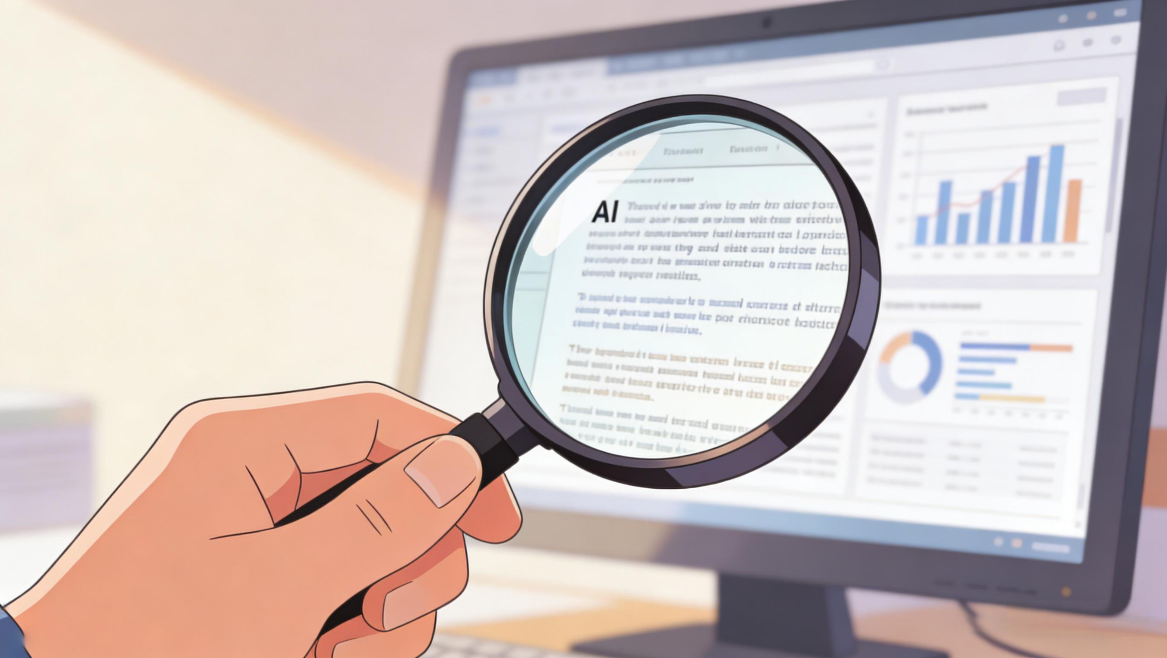
Over the past two years, one saying about AI has been repeated over and over:
The most important skill in the future is the ability to ask questions.
That is certainly true.
The more precise your questions and the more specific your needs, the closer AI’s output will usually be to your goal.
That’s why everyone has been learning prompts these past two years—learning to clarify vague demands, to make AI better understand their intentions.
But today, knowing how to ask questions is no longer rare.
Open any content platform, and you’ll find countless prompt templates. People teach you how to use AI to write articles, make plans, revise resumes, draft weekly reports, and take reading notes. Even those who struggle to express themselves now know to throw their ideas at AI first, just to get a draft out.
This means:
“Knowing how to ask” is shifting from an advantage to a basic skill.
It will become like using a search engine—a default in modern work and expression, not a real barrier between people.
What truly sets people apart is no longer who asks better questions.
It is: who thinks one step further after getting the answer.
More directly, it is who knows how to doubt.
The Step AI Most Easily Makes Us Skip Is “Doubt”
Getting information used to be far less convenient.
To understand something, you had to search for materials, read articles, and compare different sources. The process was slow, but it had a natural benefit: while seeking information, people also questioned it. They would naturally wonder if the data was real, if the conclusion was overstated, if the case was an exception.
That has changed.
Now AI hands you a “polished answer” directly.
It’s fast, smooth, and effortless—so effortless that people easily skip the most critical step: doubt.
This is the reality for many people using AI today.
Let AI draft a report first; let AI outline a plan first; let AI summarize research first. None of these actions are inherently wrong.
The real problem is that many people stop at “just getting a draft”.
In other words, AI is treated as the finish line, not the starting point.
The difference is enormous.
Some use AI to save time on basic organization, then focus on judgment and refinement.
Others use AI to skip thinking entirely, just to get something “good enough to submit.” On the surface, both groups use AI.
But over time, the gap widens. The former grow better at judging and knowing where to dig deeper; the latter grow dependent on the illusion: AI already thought this through for me.
The latter is the real danger.
Judgment does not vanish overnight—it is slowly abandoned through repeated “good enough” use of AI.
What You Should Really Doubt Is Not Whether AI Works, but Whether Its Output Is Trustworthy
So what exactly should we doubt?
At least four things deserve special vigilance:
1. Doubt its stated facts
Be alert whenever answers include specific data, studies, cases, sources, years, or people.
AI excels at fabricating realistic details, and people naturally trust content that looks specific. Many are misled not by opinions, but by these “convincing fake details.”
2. Doubt its logic
Some content is not factually wrong, but logically flawed.
For example, treating two simultaneous phenomena as direct cause and effect, or omitting key premises to reach a smooth conclusion. Often, the issue is not the conclusion itself—but how quickly it arrives.
3. Doubt overconfident, absolute claims
Most real-world issues cannot be summed up in a single sentence. Judgments come with premises, scopes, and exceptions.
Yet AI naturally organizes answers to look complete and “standard.” Be wary whenever complex issues are explained too neatly.
4. Doubt missing critical information
AI does not always lie, but it often leaves out key details.
When analyzing whether a direction is worth pursuing, it may highlight market size, user demand, and growth trends—but omit execution difficulty, competitive barriers, and practical obstacles. Readers easily assume they have a complete picture.
Many Can Use AI, Few Can “Fact-Check AI”
So how do we practice doubt?
It doesn’t have to be complicated—start with these habits:
First, ask for evidence, not just conclusions
Question where data comes from, the source of cases, whether studies have original texts, and what materials support conclusions. You don’t need to verify everything every time, but keep this awareness.
Second, demand the full reasoning process
Don’t just accept “therefore”—ask “why.” Many flaws become obvious once the logical chain is laid out.
Third, ask for counterarguments
If you think a judgment is correct, ask for its strongest objections. If you think a direction is promising, ask why it might fail.
Fourth, be extra careful with content that drives decisions
Loose use is fine for inspiration, headlines, phrasing, and frameworks.
But for decisions involving money, public statements, or critical judgments, never treat AI’s first draft as the final conclusion. AI can generate answers, but it cannot take responsibility for the consequences.
AI’s Greatest Strength Is Making You Think You Already Thought
Ultimately, why is the ability to doubt becoming so rare?
Because AI’s biggest temptation is not its power—it’s the thought:
Since AI organized this for me, do I even need to think?
It is incredibly tempting.
And it doesn’t make people lazy overnight—it gently and smoothly erodes the habit of “thinking one layer deeper.”
Over time, more people will get used to asking AI first, then deciding what to think.
Worse, many don’t even realize this is happening.
In 2025, Microsoft Research published a survey analyzing 319 knowledge workers and 936 real-world AI use cases. The study found that the more confidence users had in AI, the less critical thinking they invested; and when people treated AI as a substitute for their own judgment, their cognitive effort decreased.
As more people learn to ask good questions, the truly valuable skill belongs to those who, after reading an answer, automatically ask:
- Is this true?
- What is this based on?
- What is missing?
- What could go wrong if I act on this?
Whoever retains these questions will be less easily led astray in the AI era.
In the End, the Only Thing That Truly Matters Is Doubt
Put plainly:
The most dangerous people in the AI era are not necessarily those who can’t use AI.
They are more likely those who use AI skillfully, but stop judging. People who can’t use AI at least know their limits.
The real risk is people who appear increasingly efficient, produce polished work quickly, but essentially only copy, organize, and polish AI output—without developing their own judgment. Such people feel accomplished in the short term.
In the long run, they risk turning themselves into high-level transshipment hubs. And doubt, like a muscle, grows dull with disuse.
AI can save enormous amounts of time—and that is a good thing.
But never skip that final step.
That step is called doubt.