
Data Monetization in Web3 Requires Decentralized Identity and Verifiable Ownership
I. Opening — one clear promise
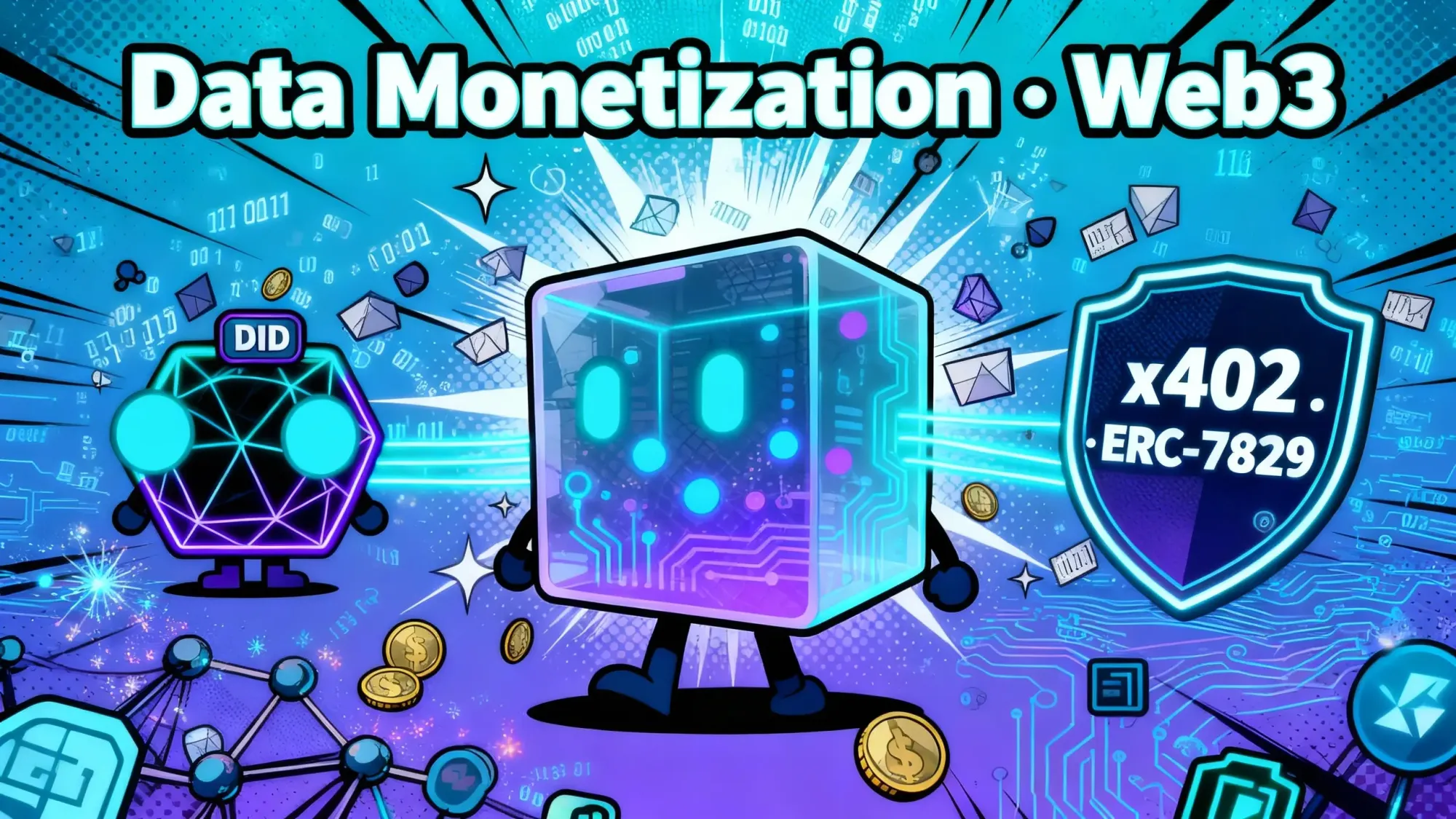
Data Monetization in Web3 Requires Decentralized Identity and Verifiable Ownership. That sentence is not marketing fluff — it is the practical requirement for turning scattered bits into real, tradable economic assets. If a dataset, an AI interaction log, or an IoT stream cannot be tied to a verifiable owner and a clear set of rights, no reputable buyer, regulator, or model-training pipeline will accept it. MEMO’s stack — from MEMO DID and data wallets to on-chain proof anchoring and ERC-7829-style metadata — addresses this exact gap so data can flow as value without sacrificing control or compliance.
II. The human problem under the technical terms
People distrust “data monetization” because past models meant platforms profited while users lost control. Businesses worry about legal exposure and low-quality inputs for AI models. The technical framing (DID, proofs, standards) matters because it answers these human concerns in plain terms:
- Who created this data?
- Who can use it, and for what?
- Has it been altered?
- How is revenue split and enforced?
MEMO treats these questions as product requirements: assign a DID at generation time, sign and hash the asset, anchor proofs to a data chain, and publish machine-readable rights. This straightens the trust line between owner and buyer.
III. What DID actually does — a short narrative
Decentralized Identifiers (DIDs) let you give people, devices, and even AI agents persistent, cryptographically verifiable names that travel across platforms. Imagine a delivery truck whose telemetry is signed by its DID every minute — downstream buyers can verify each record came from that truck, not a scrubbed log. That verifiability is the single feature that transforms telemetry, AI prompts, and model outputs into merchantable assets. The W3C DID spec defines how to make these identifiers resolvable and verifiable, and real systems (like MEMO DID) implement the spec so enterprise processes can rely on it.
IV. ERC-7829: the common language for data assets
Standards lower transaction friction. ERC-7829 proposes a consistent “data asset NFT” format: metadata fields for provenance, storage proofs, reader roles, and lifecycle rules. With that wrapper, buyers don’t need bespoke contracts for every dataset — they can programmatically inspect an ERC-7829 record and know whether the asset fits their use (training, analytics, resale) and what restrictions apply. MEMO has been active in this space, packaging data with ERC-7829-style metadata so datasets become interoperable across marketplaces and verifiers.
V. x402 and why payments must be machine-native
A dataset that can be verified still needs a payment rail that matches its consumption patterns. AI agents and services need micro, instant, and programmatic payments — humans cannot approve every training-run purchase. x402 revives HTTP 402 as a standardized pay-first pattern for APIs and content, enabling agents to negotiate and settle value over HTTP with stablecoins or equivalent rails. Put together: DID proves identity, ERC-7829 expresses rights, x402 moves funds — a complete machine-native commerce loop.
VI. How these pieces play together in a real flow (short story)
Consider a healthcare analytics company that wants to license anonymized wearable data for model training. Under a MEMO-style workflow:
- Each user and device has a DID; raw streams are signed at source.
- Data is hashed and the hash + signature anchored to the data chain; ERC-7829 metadata declares allowed uses and retention.
- A buyer AI agent discovers the dataset, verifies signatures and storage proofs, and negotiates access.
- The agent pays via x402; access logs and revenue splits are enforced by the asset metadata and on-chain records.
This narrative shows the payoff: buyer trust, regulatory traceability, and revenue flowing to rightful owners — all automated and auditable.
VII. Practical guidance — concise, actionable steps
If you’re building a product team, start with these incremental moves (not a heavy, risky rip-and-replace):
- Issue DIDs for producers (users/devices/agents).
- Sign and hash assets at creation; anchor proofs immediately.
- Add interoperable metadata (ERC-7829 fields) describing rights and pricing.
- Integrate an x402-capable payment endpoint for pay-per-use scenarios.
- Expose discovery APIs so agents and marketplaces can find and verify assets.
These steps map directly to MEMO primitives (data wallets, DID issuance, on-chain proof anchoring, and ERC-7829 packaging), shortening time to market and lowering engineering risk.
VIII. Conclusion — tangible benefits, again
Data Monetization in Web3 Requires Decentralized Identity and Verifiable Ownership. That requirement is not academic — it is the pragmatic design principle for any business that wants data to become an asset rather than a compliance headache. When DID, verifiable proofs, standards like ERC-7829, and machine-native rails like x402 operate together, data markets gain trust, AI models receive higher-quality inputs, and users finally capture real value from their digital footprints. MEMO bundles these capabilities into a practical stack so companies can pilot and scale with confidence today.