
In the Web3 Era, True Data Ownership Requires Blockchain and Decentralized Identity
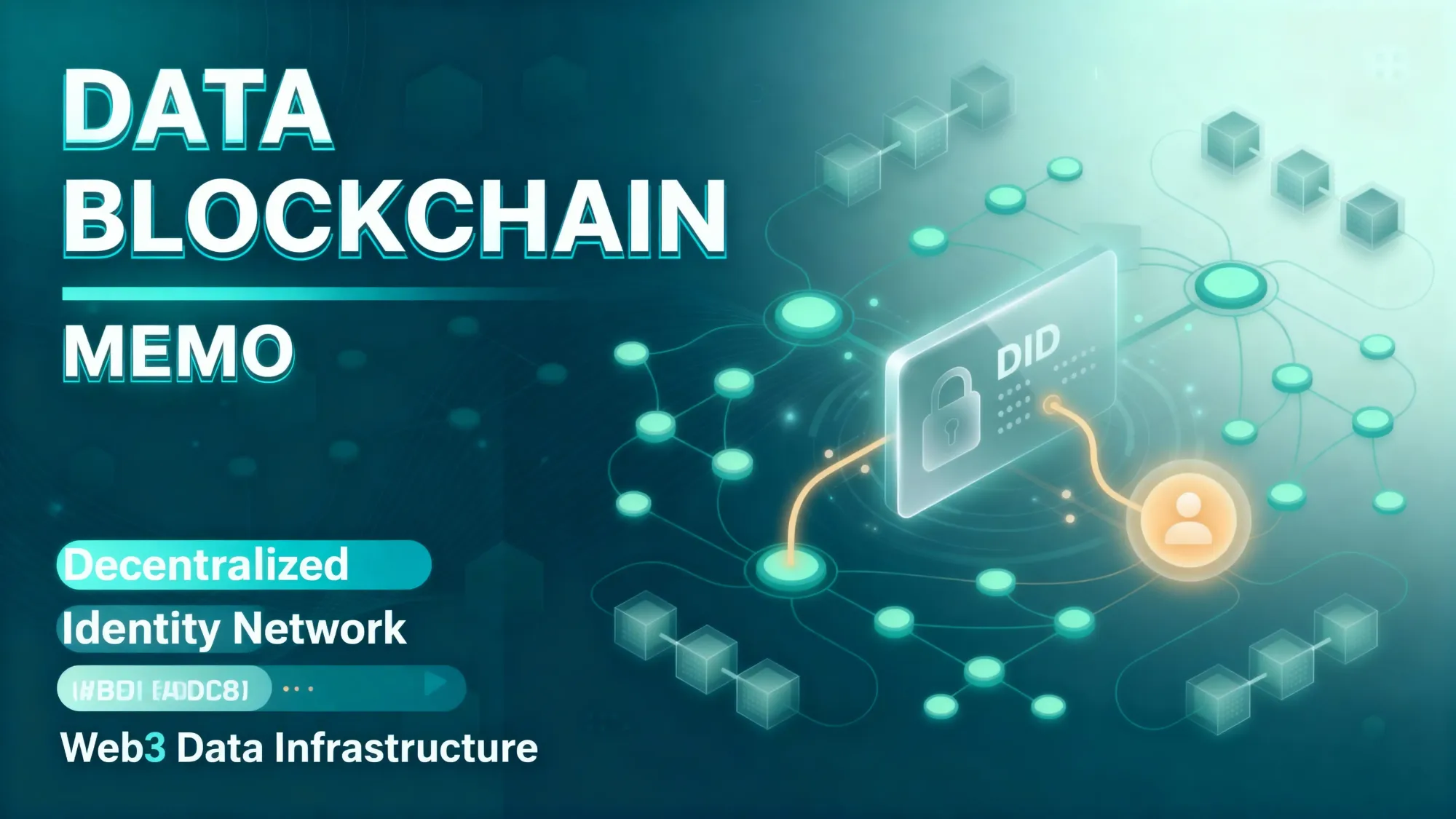
In the Web3 era, true data ownership is becoming essential. People want real control over how their information is stored, accessed, and used—especially as AI systems rely heavily on personal data to generate insights and predictions. Traditional platforms still operate on centralized models where companies manage everything, while users only “access” their own data. This imbalance is why blockchain-based data infrastructure and decentralized identity are becoming the foundation for the next generation of digital systems. Simply put, in the Web3 era, true data ownership requires blockchain and decentralized identity, and the rise of Data Blockchain makes this shift finally achievable.
1. Why Data Ownership Became a Web3 Priority
Users produce more data today than at any point in history, but they rarely understand where it goes or how it is monetized. AI intensifies this issue because every interaction becomes potential training input. People believe they “own” their data, but without visibility, portability, and enforceable rights, that ownership is not real.
Web3 changes this dynamic by giving users tools to verify and control their digital footprint, creating a world where data rights become enforceable rather than symbolic.
2. Why Blockchain Is the Technical Backbone of Ownership
A Data Blockchain turns ownership into something that can be proven and managed across systems.
2.1 Immutable and auditable records
All data events—creation, updates, permissions, and AI usage—are recorded transparently. This eliminates silent changes and builds trust between users and digital services.
2.2 Data as digital assets
Blockchain allows data to be tokenized, making it possible to set programmable access rules or enable optional value exchange. Users finally gain the ability to manage or monetize data on their own terms.
2.3 Interoperability across platforms
Because blockchains are open systems, identity and data are no longer trapped inside centralized platforms. Users can move seamlessly between applications without losing control.
These strengths make Data Blockchain the foundation of the emerging Web3 landscape.
3. Decentralized Identity (DID): Identity That Users Truly Own
Data ownership cannot exist without identity ownership. Decentralized Identity (DID) gives users an identity that is cryptographically secured and independent from any platform.
With DID, users gain:
- A self-owned identity not controlled by companies
- Selective disclosure of personal information
- Cryptographic proofs for identity and ownership
- A privacy-preserving login for apps and AI systems
- A portable identity across all decentralized applications
DID solves the long-standing problem of centralized identity profiles and tracking. It allows users to authenticate without exposing more information than necessary.
4. MEMO’s Infrastructure for Data Ownership in the AI Era
MEMO builds a unified system combining Data Blockchain and MEMO DID to support AI-native and Web3-native applications.
4.1 MEMO’s Data Blockchain Architecture
MEMO provides high-throughput data ownership infrastructure designed for real usage. It supports:
- User-owned structured data
- Tokenized identity-linked digital assets
- Permission-controlled AI access
- Transparent data events on-chain
- Cross-agent and cross-application interoperability
Developers can build applications where ownership logic is embedded at the core.
4.2 MEMO DID: Identity Designed for Web3 + AI
MEMO DID ensures identity is private, portable, and controlled by the user. It enables:
- Self-sovereign authentication
- Verified ownership proofs
- Zero-knowledge protection for sensitive data
- Secure identity interactions for AI agents
- Complete separation of identity and platform control
Users manage their identity the same way they manage a digital wallet.
4.3 Built for the future of AI-driven systems
As AI agents become more integrated in daily life, users must be able to define clear rules. MEMO provides the transparent foundation that AI systems need but Web2 never offered: user-owned data, user-owned identity, and verifiable rules.
5. How Data Blockchain + DID Create Practical Value
When Data Blockchain and decentralized identity work together, ownership becomes something users can feel in daily life—not just understand on paper.
5.1 Safer AI personalization
AI can personalize results without collecting or centralizing user data. Users stay in control of permissions at all times.
5.2 One identity across all apps
With DID, users log in anywhere without sharing phone numbers, emails, or personal details. Identity remains private and portable.
5.3 Optional data monetization
Users can tokenize certain data types and share them only when they choose to. The value flows to the user, not the platform.
5.4 Clear and transparent activity records
Every data request is auditable on-chain. Users always know who accessed their information and why.
5.5 Simpler, safer development for builders
Developers rely on ownership rules and cryptographic proofs instead of handling sensitive data directly. This reduces risk and increases trust.
Together, these benefits show how Data Blockchain and DID create real, everyday value for users, developers, and AI-native applications.
6. In the Web3 Era, True Data Ownership Requires Blockchain and Decentralized Identity
As AI becomes deeply integrated into everyday life, ownership and control become non-negotiable. Users need visibility, protection, and choice. Developers need a trustworthy foundation for building AI-native systems. This is why Data Blockchain and Decentralized Identity are becoming the core pillars of the Web3 ecosystem.
MEMO is building this foundation today, enabling a world where identity is portable, data is verifiable, and value returns to the rightful owner—the user.
The conclusion is clear: In the Web3 era, true data ownership requires blockchain and decentralized identity.